_edited.jpg)
How Young Actors Can Build a Great Reputation in Theatre


In auditions, rehearsals, and performances, audiences and production
teams form opinions about performers based on what they see and hear.
When people see the same behaviors repeated over time, their opinions can become an actor's reputation.
In theatre (and life), your reputation is built by what you consistently do, not just by what you say about yourself.
Over time, the way an actor consistently behaves influences how directors, instructors, and fellow performers experience working with them—and that can shape future opportunities.
Talent may get someone noticed. A good reputation can help people remember that they want to work with you again.
It’s up to you to make sure your reputation matches your values.
Do you want to be known as someone kind and respectful? Then be kind and respectful to everyone at rehearsal.
Do you want to be known as someone who takes having a solo seriously? Then learn your solo and do your best every time.
Do you want to be known as a leader? Then listen, follow instructions, and help the people around you do the same.
Here are five ways to build a strong reputation in theatre, whether you're just starting out or have been performing for years.

1. Active Listening
Some of the best acting lessons I’ve ever learned were from watching other actors and listening to the feedback they got from instructors and directors, then applying that information to my performance.
Active listening shows directors and instructors that you are engaged, teachable, and interested in improving—not just waiting for your turn to speak or step on stage.
And active listening doesn’t only happen when someone is talking directly to you. Watch what is happening in the room. Listen when another actor receives direction - you might use that skill someday. Pay attention during choreography - your group may do the same choreography later in the dance. Notice what your scene partner is doing - it should change how your character responds.
You can learn a lot by listening before you act (pun intended).
2. Follow Through

This one might be the simplest to say and the hardest to live out: Do what you say you’re going to do.
If you committed to a project, finish the project. If you said you would learn your lines, learn your lines. If you agreed to bring a costume piece or prop, remember to bring it. If you’re called for rehearsal, be at rehearsal!
One of the easiest ways to practice this is to keep up with your script and take it home with you instead of leaving it at rehearsal. Build up your ‘follow through muscles’ until it’s a habit and you’ll be known as a reliable actor.
Trust is built when people know they can count on you.Actors who production teams can trust to do their part, stay committed through performance day, and follow through on what they say they’ll do often get opportunities to do cool things!
Note: Of course, sometimes circumstances change. Communicating honestly when you need to step away from a commitment is part of being responsible, too.
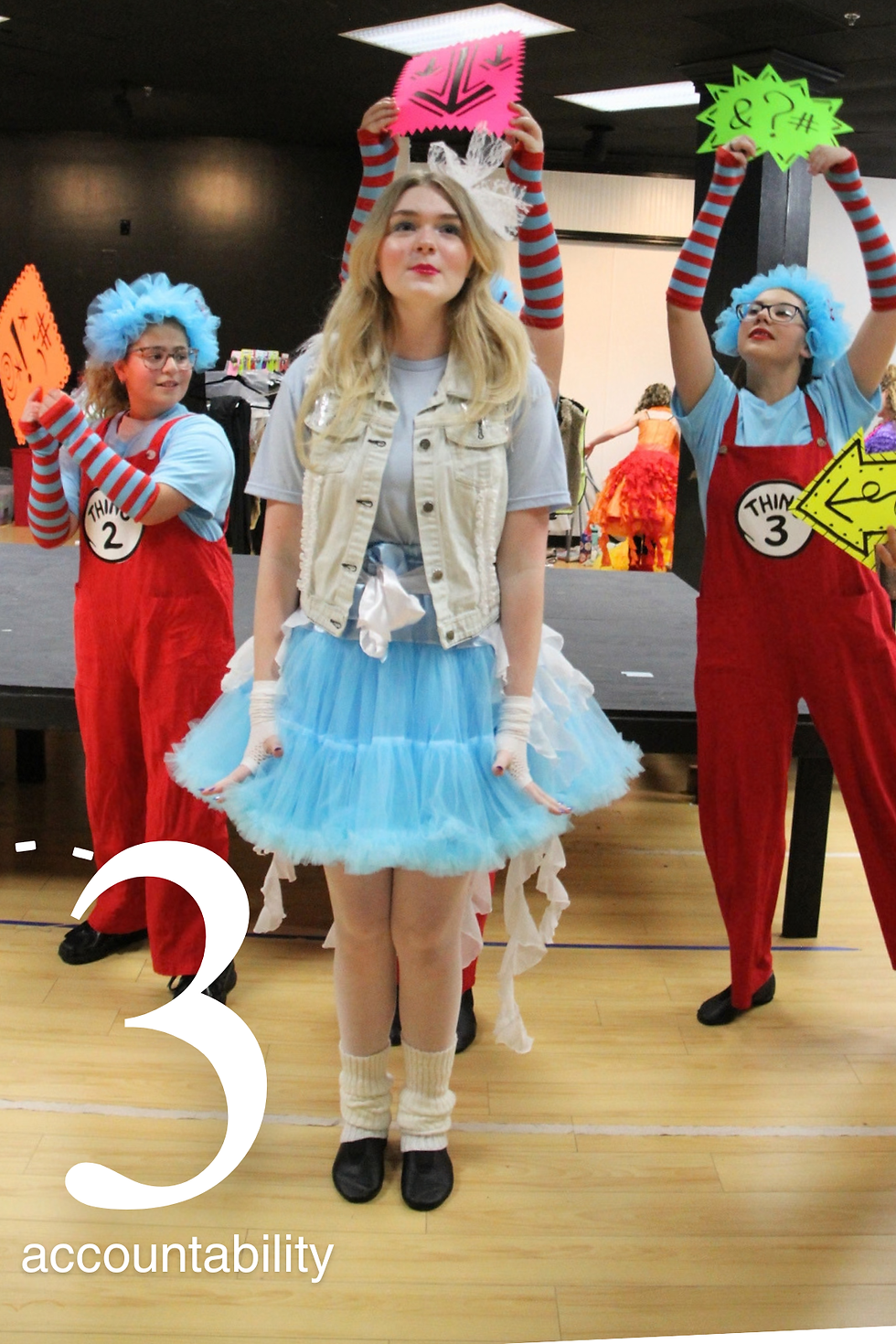
3. Accountability
If you mess up, take accountability.
Blaming the script, the weather, or those around you usually doesn't solve the problem—and production teams can often tell when you're avoiding responsibility.
Own up to it.
Forgot your lines? Acknowledge it and work harder to be prepared next time. Made a choreography mistake onstage? Keep going and learn from it. Missed a rehearsal? Communicate with your director and make sure to use all of your resources to get caught up.Typically, we’ll have formation charts, some key blocking notes, choreography videos, rehearsal videos, and other resources available to the cast, and it’s always a good idea to ask a fellow actor what you missed once you’re back at rehearsal.
Nobody expects actors to be perfect - especially in an educational setting. They do expect actors to be honest, responsible, and willing to grow.
4. Preparation

Preparation is one of the easiest ways to show respect for everyone else in the room.
Know your lines. Practice your music. Review your choreography. Bring what you need. Arrive ready to work.
You don't have to know everything yet. Preparation means taking responsibility for what you can control and asking questions when you need help.
When you come prepared, you get more out of rehearsal—and you give your director, scene partners, designers, and fellow actors more to work with.
Preparation also communicates something important without you ever having to say it: I care about this opportunity.
Being unprepared (like not knowing your lines by the off-book date) gives the appearance that you don’t care about the role you’ve been trusted with - and makes it less likely that you’ll be trusted with one again.

5. Collaboration
We say these two things all the time: theatre is a team sport and you can’t win a musical.
Even if you have the most lines, the most solos, or the most featured dance moments in a show, you cannot create a production by yourself. A great reputation isn’t just about how well you perform when the spotlight is on you. It’s also all the ways you contribute to a great show
Celebrate someone else’s success. Help when you can. Respect different ideas. Make space for other people to contribute. Be part of solutions. Do your part.
You don’t have to be friends with everyone you work with, but you do have to treat them all with the same level of respect — no matter if they’re a director, volunteer, scene partner, technician, or theatre venue staff member. The best moments in our shows happen when ideas combine, actors work together, and something new gets created.
The actors people want to work with again aren’t necessarily the ones who are perfect every time. They are the ones who make the rehearsal room a pleasant, exciting place to be.
Your Reputation Is Built One Choice at a Time

Your reputation doesn’t appear overnight.
It’s built in the little moments: how you respond when you get corrected, whether you help clean up, how you treat the newest person in the room, whether you show up prepared, and what you do when nobody is watching.
The good news is that you get to make those choices every day! And each time you make a choice that positively builds your reputation (or take accountability when you make one that doesn’t), it’ll get a little bit easier. Soon, your choices will become a habit. Then, that habit becomes part of who you are and how others think about you. How cool that your choices impact who you become and your reputation!
You don’t have to be the most talented person in the room to build a strong reputation. Be someone who listens. Someone who follows through. Someone who takes accountability. Someone who prepares. Someone who makes the people around them feel supported.
This is one of the reasons our values—kindness, respect, focus, and work ethic—make up 25% of an actor's audition score. Theatre isn't just about what happens when you're on stage. It's about how you show up for yourself and the people around you.
At Brazos River Youth Theatre, we believe the skills young people develop through theatre extend far beyond the stage.
Learning to listen, follow through, take responsibility, prepare, and collaborate can help young performers become stronger actors—but those skills don't stop being useful when the show ends.
That's why our classes, camps, and productions are designed to challenge students artistically while helping them build the life skills they'll carry with them beyond the stage.
Looking for a theatre program for your young performer? Click here to explore our upcoming classes and productions and find your next opportunity to step into the spotlight.


Comments